Plastic Waste Trade and Microplastic Risk: What Changes Now?
Plastic waste exports are often described as recycling, but a new review in npj Emerging Contaminants argues that the story is more complicated. When mixed, contaminated or low-value plastic is shipped into systems with weak collection, informal sorting, open dumping or open burning, some of that material can become a long-lived source of microplastic pollution. The key point for readers is simple: microplastic prevention cannot stop at the recycling bin. It has to include product design, export controls, traceability and evidence of what happens after a bale, sack or container leaves the first buyer.
This matters for consumers, educators, small businesses and sustainability teams because the trade route can hide the real risk. A package may look recyclable in theory, yet still be hard to sort, costly to process or likely to shed fragments during handling. The practical response is not to reject all recycling. It is to ask sharper questions about which plastics are being used, where they are processed, and whether the system can prove that material is recovered without shifting pollution onto another community.
Answer First: What The New Research Says
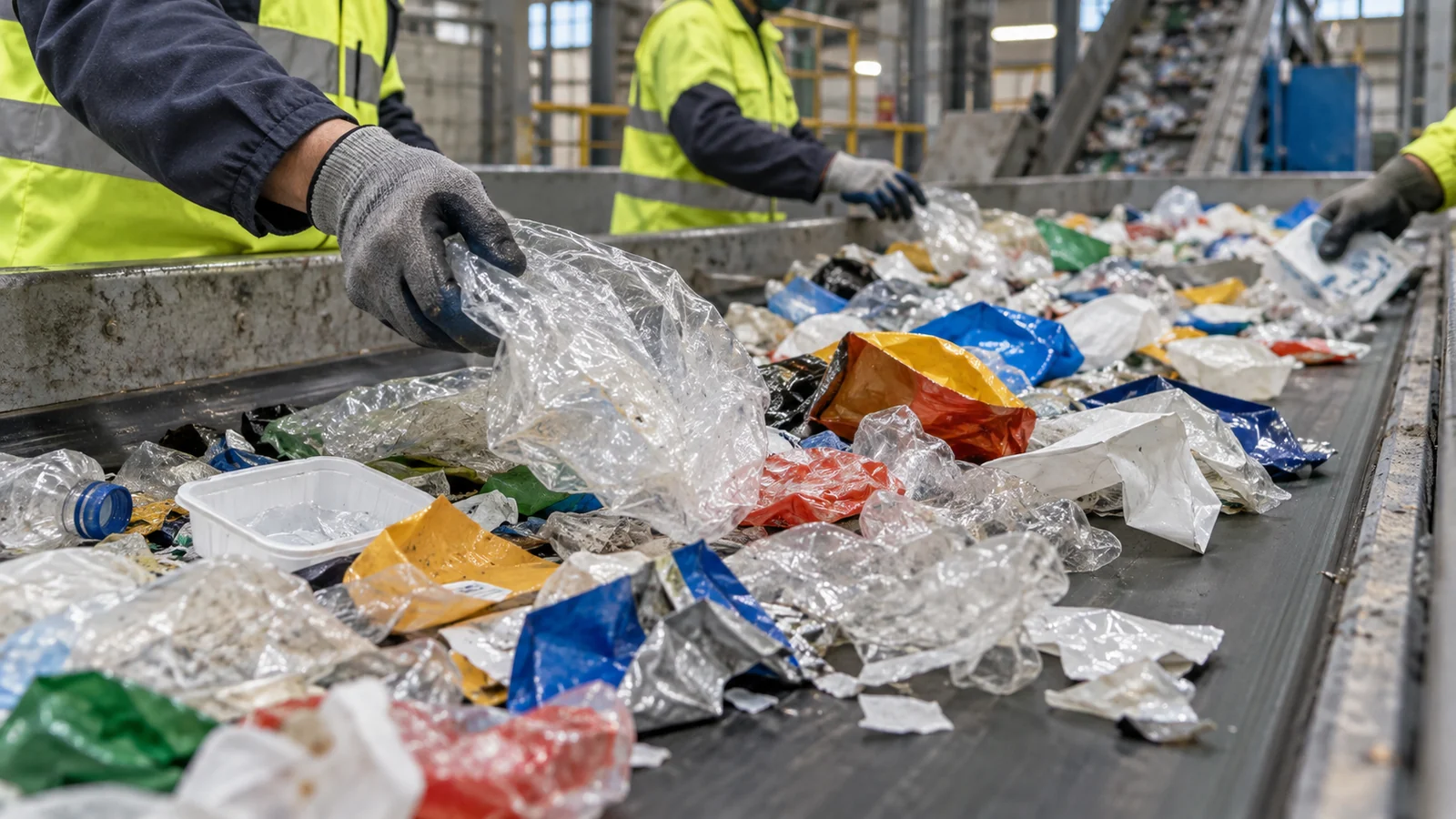
The new paper, published on 2 September 2026, examines how global plastic waste exports can amplify microplastic pollution through informal recycling, dumping and burning in importing regions with limited waste-management capacity. Its most useful estimate is not a precise forecast but an order-of-magnitude warning: about 14 million tonnes of plastic waste are traded globally each year, and an estimated 20-60% may be mismanaged depending on regional capacity. The authors calculate that this could place roughly 3-8 million tonnes of traded plastic into uncontrolled pathways annually.
The paper also applies an indicative fragmentation rate of about 3% per year. Over a decade, that would mean a material share of mismanaged traded waste breaking down into secondary microplastics. The article reports a simplified mass-flow estimate of about 2.2 million tonnes of microplastic releases from traded waste, while stressing the uncertainty behind the number. That caveat is important. The figure should be read as a warning signal, not as a settled inventory.
For policy and procurement, the implication is clear: the safest tonne of plastic is the tonne that does not need to be exported as low-value waste. Where plastic is necessary, simpler formats, cleaner collection, credible end-market documentation and worker-safe recycling controls matter more than broad claims that something is recyclable.
Why Waste Trade Can Become A Microplastic Problem
Microplastics are plastic particles under 5 mm. They can be produced intentionally, but most public concern now focuses on secondary microplastics: fragments created as larger plastic items weather, abrade, crack, shred or burn. Waste trade adds a geographical twist. The products may be consumed in one country, exported as scrap from another, and fragmented in a third location where the receiving system has fewer resources to control dust, wastewater, open storage or disposal.
The research identifies several pathways. Sorting and shredding can create plastic dust and fragments. Washing can move particles into wastewater if filtration is weak. Outdoor storage exposes mixed plastic to sunlight, heat and abrasion. Open dumping allows plastic to fragment in soil and waterways. Open burning creates additional air-pollution and worker-exposure risks. None of these pathways is unique to exported waste, but export can concentrate them in places that did not generate the original demand.
The estimate is useful because it shows scale, not certainty
The headline numbers are deliberately broad because the underlying data are patchy. Polymer type, sun exposure, temperature, humidity, mechanical stress and waste handling all affect fragmentation. A brittle multilayer sachet in an open dump will not behave like a clean PET bottle in a controlled facility. That is why a responsible reading avoids false precision. The useful lesson is that traded waste can become a distributed microplastic source if governance and infrastructure are weak.
Recycling can still help, but only under controlled conditions
The point is not that recycling is bad. Mechanical recycling remains an important way to reduce demand for virgin plastic. The problem is that recycling is often treated as a magic word even when the physical system is not strong enough. The OECD has estimated that, after losses, only 9% of plastic waste was ultimately recycled globally in 2019, while 22% was dumped, openly burned or leaked into the environment. A credible circular system has to reduce those losses, not export them out of view.
What Basel, UNEP And OECD Context Add
The Basel Convention is central because it governs transboundary movements of hazardous and other wastes. In 2019, its Conference of the Parties adopted plastic waste amendments that became effective on 1 January 2021. These amendments clarified which plastic wastes are subject to export, transit and import controls, including prior informed consent for categories that are hazardous or not presumed to be clean, sorted and destined for environmentally sound recycling.
UNEP's plastics treaty process adds a broader frame. The UN Environment Assembly resolution asked negotiators to develop a legally binding instrument addressing the full life cycle of plastic, including production, design and disposal. As of the UNEP page updated on 9 September 2026, the fifth session had been split across Busan, Geneva and a short 2026 organizational meeting, with substantive negotiations still being prepared for the next stage. That matters because waste trade is downstream of design and production decisions. If products keep becoming more complex and disposable, border controls alone cannot solve the problem.
OECD projections underline the same pressure. Under current policies, plastic waste could almost triple by 2060, with half still landfilled and less than a fifth recycled. Leakage to the environment is projected to double under business as usual. In other words, better recycling infrastructure is essential, but it will struggle if overall plastic use, low-value packaging and mixed-material formats keep rising.
What This Means For Packaging Choices
For businesses, the first practical lesson is to stop treating export as proof of recovery. A waste contractor certificate, a photograph of baled material or a high recycling ambition is not enough. Ask for the actual processor, the country of treatment, the material grade, the contamination threshold, the reject rate and the fate of residues. If the answer is vague, the risk has not been managed.
The second lesson is design. Flexible films, multilayer laminates, sachets, black plastics and heavily contaminated food-service packaging are often harder to sort and sell into high-quality recycling. They are also more likely to become low-value fractions. Moving toward reusable packaging, refill models, mono-material formats and fewer polymer-additive combinations can reduce the chance that material becomes an export problem later. Beat Plastic Pollution's guide to reusable packaging systems is a useful internal companion for that design conversation.
The third lesson is local proof. If a cafe, hotel, school or small retailer cannot verify a recycling route, it can still reduce risk by cutting unnecessary single-use formats, buying larger refill containers, separating clean streams and prioritising products with take-back systems that publish end-market evidence. Bathroom amenities are a good example: refillable dispensers and concentrated formats can cut packaging churn when they are chosen carefully. The site's article on responsible bathroom packaging gives a practical entry point for hospitality and household buyers.
A Practical Checklist For Buyers And Operators
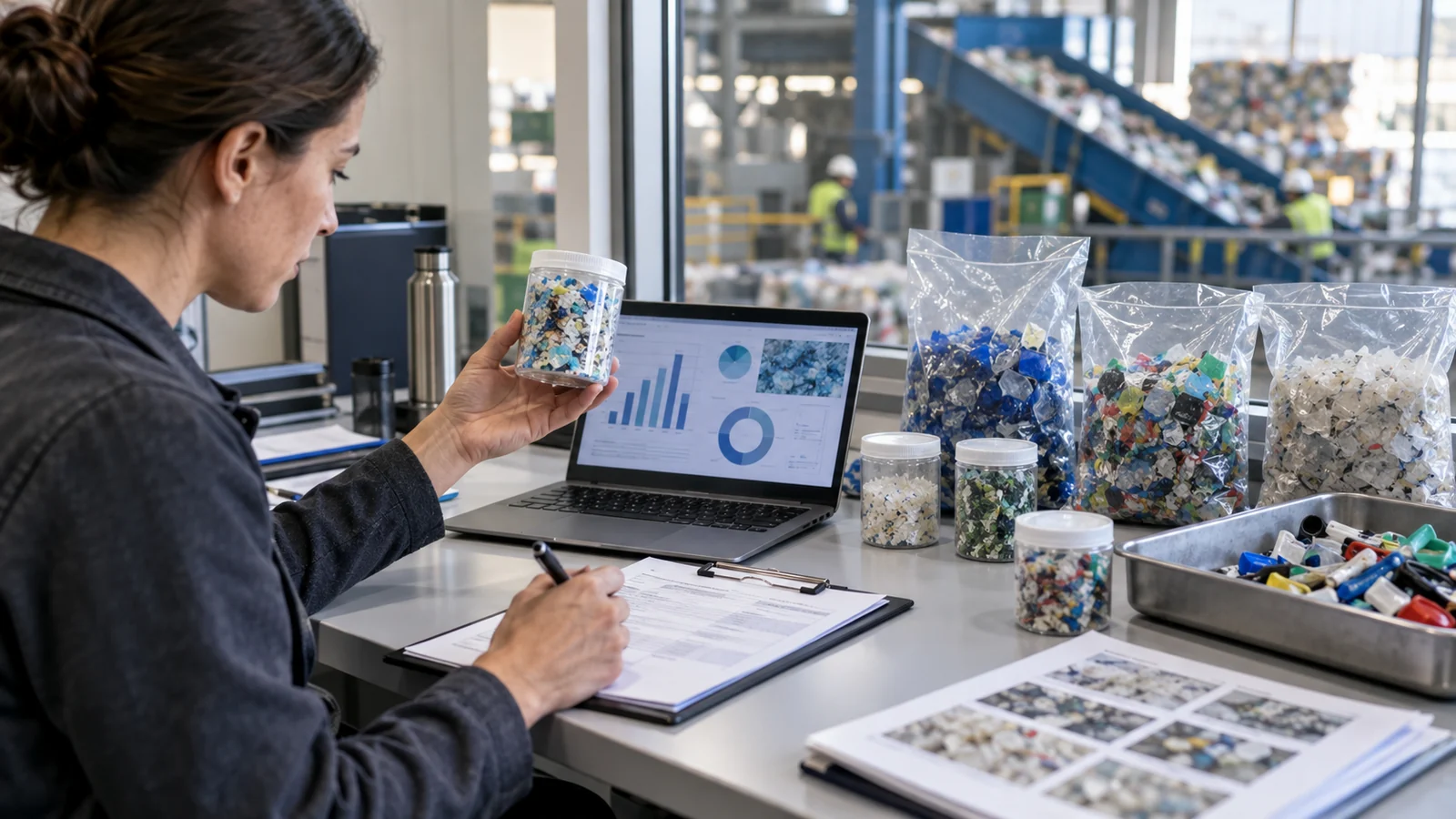
- Map the material. List the main plastic formats you buy or discard: PET bottles, HDPE containers, films, sachets, mixed laminates, expanded foam, food-service items and textiles.
- Ask where it goes. Request the name and location of the first processor and, where possible, the final recycler or disposal route for rejects.
- Check export exposure. Ask whether any fraction is exported, under which waste code, and whether it falls under Basel controls.
- Prefer clean, simple streams. Mono-material packaging with clear sorting routes is usually easier to verify than complex composites.
- Reduce before recycling. Remove unnecessary single-use items and switch repeat-use settings to refill or reuse where hygiene and logistics allow.
- Control handling emissions. For larger operations, ask recyclers about dust capture, wastewater filtration and worker protection around shredding and washing.
- Document claims. Keep invoices, specifications, audit records and end-market statements. Avoid public claims that go beyond the evidence.
How Educators Can Explain The Issue
A simple classroom or staff-training frame is to follow one plastic item through four questions: Who designed it? Who used it? Who paid to collect it? Who lives near the place where it is sorted, burned, dumped or recycled? This turns microplastic pollution from an abstract ocean problem into a systems problem. It also helps people see why a recycling symbol is not the same as a functioning recycling system.
For a practical activity, compare three packaging formats: a refillable container, a clear mono-material bottle and a multilayer sachet. Ask learners to score each one for necessity, reuse potential, sortability, likely value after collection and risk of export. The aim is not to shame individual consumers. It is to show that design and procurement decisions can either simplify or complicate the end of life.
Conclusion: The Better Question Is Where The Plastic Ends Up
The new research does not prove that every exported bale becomes microplastic pollution. It does something more useful: it shows why waste trade has to be included in microplastic prevention. A system that exports hard-to-recycle material without transparent treatment can move the environmental burden while preserving the illusion of circularity.
For readers, the practical shift is to look beyond labels. Ask whether a product is necessary, whether it can be reused, whether it is simple enough to recycle locally, and whether the recovery route is documented. For policymakers, the lesson is to connect trade controls, product design, extended producer responsibility and microplastic monitoring. For businesses, it is to make packaging decisions that still make sense after the product leaves the customer, the bin and the border.
FAQ
Does this mean plastic recycling is harmful?
No. Recycling can reduce virgin plastic demand when the material is clean, sorted and processed under controlled conditions. The risk rises when low-value or contaminated plastic is exported into weak systems, informally handled, dumped or burned.
What is the most important number from the new paper?
The most useful figure is the estimate that about 14 million tonnes of plastic waste are traded globally each year, with 20-60% potentially mismanaged depending on regional capacity. The exact microplastic output remains uncertain.
Which packaging formats deserve extra scrutiny?
Flexible films, multilayer sachets, mixed-material laminates, contaminated food packaging and very low-value plastics need extra scrutiny because they can be difficult to sort, recycle and verify.
What should a small business ask its waste contractor?
Ask where each plastic stream goes, whether it is exported, which processor receives it, what happens to rejects, and whether the route includes dust, wastewater and worker-safety controls.
Sources
- Global plastic waste exports and the implications for continued microplastic pollution, npj Emerging Contaminants, 2026.
- Basel Convention Plastic Waste Amendments, official Basel Convention page.
- UNEP Intergovernmental Negotiating Committee on Plastic Pollution, official UNEP page.
- OECD Global Plastics Outlook: Economic Drivers, Environmental Impacts and Policy Options, 2022.
- OECD Global Plastics Outlook: Policy Scenarios to 2060, 2022.
- Packaging Insights coverage of the new research, 2026.