PLA microplastics in digestion: what biodegradable really means
Biodegradable plastic is often treated as the reassuring middle ground between convenience and pollution. It can be a better choice in specific managed systems, especially where certified composting infrastructure exists. But the word "biodegradable" does not mean a material disappears safely in every environment, on every timeline, or after it has fragmented into microplastics.
A new open-access study in npj Emerging Contaminants, published on 10 September 2026, gives readers a useful reason to slow down before accepting simple claims. The authors studied polylactic acid, or PLA, microplastics in simulated human gastric and intestinal fluids. PLA is widely used in food-contact items such as clear cups and packaging. In the experiment, digestive enzymes helped change the surface and chemistry of PLA particles over 96 hours. The study does not prove that a real person will be harmed by using a PLA cup, and it should not be read that way. It does show why biodegradable plastics need evidence, context and careful end-of-life planning.
For consumers, educators and small businesses, the practical lesson is not panic. It is procurement discipline: reduce avoidable single-use items first, use reuse systems where hygiene and operations allow, and treat compostable or biodegradable packaging as a conditional tool rather than a blanket solution.
Answer first: biodegradable is not the same as harmless
PLA is a biobased polyester that can be useful in the right waste-management conditions, but it is still a plastic material. If PLA breaks, abrades or is mismanaged, it can become small plastic particles. Once a material reaches the microplastic scale, the most important question is not whether the original item had a greener label. The question is where the particles go, how they change, and whether people or ecosystems are exposed.
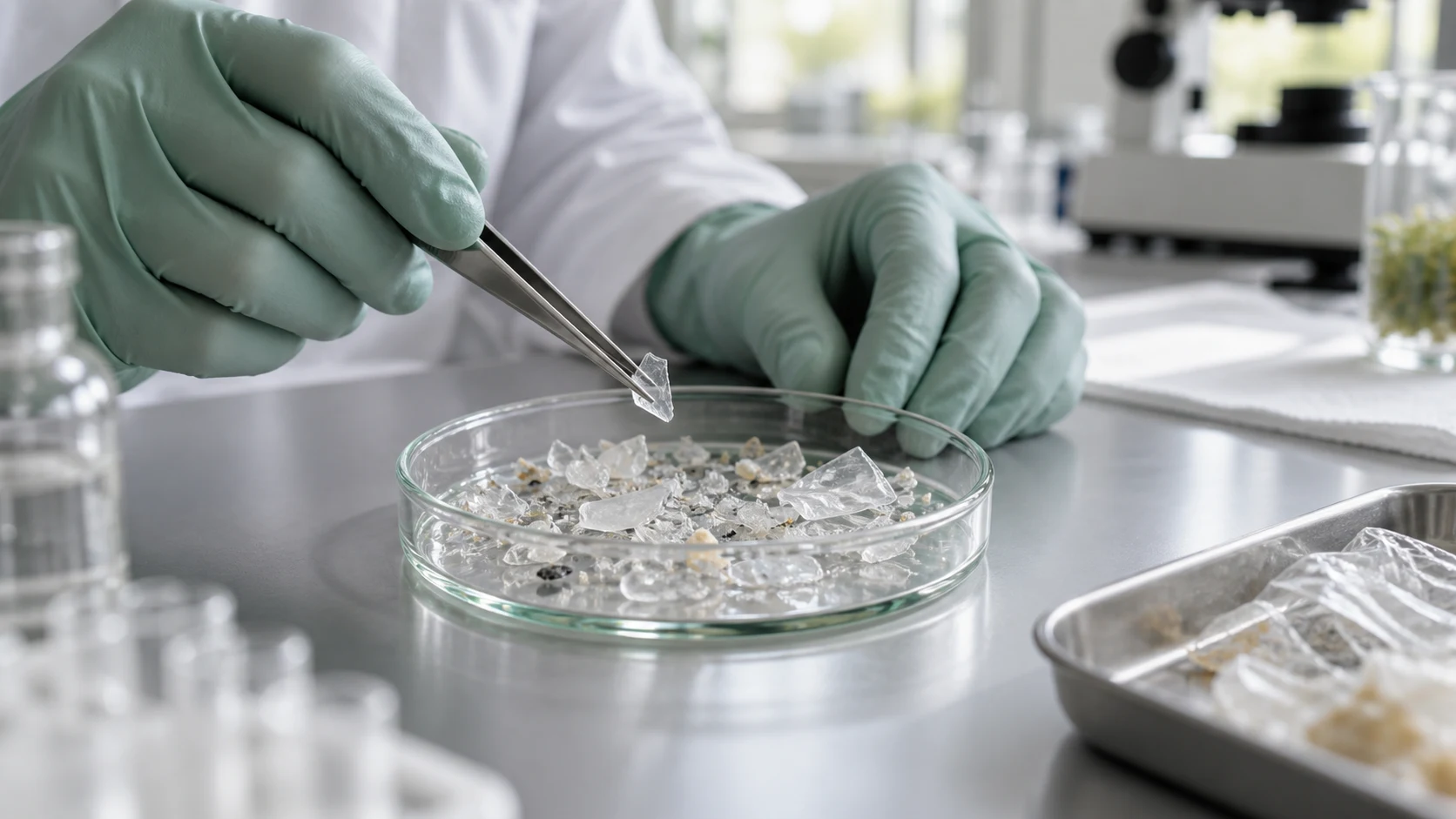
The Nature Portfolio paper is important because it looks at transformation inside a simulated digestive setting, not only outdoor litter or composting. The researchers reported that PLA microplastics changed after incubation in simulated gastric and intestinal fluids. They found increased oxygen content, changes in water contact angle, shifts in crystallinity and signs of degradation products. Pepsin in simulated gastric fluid and trypsin in simulated intestinal fluid were identified as key contributors to the aging of the particles.
That finding fits a broader policy reality. The European Commission describes microplastics as plastic pieces usually smaller than 5 mm and notes that they are persistent, mobile and hard to remove from nature. The same EU page also says biodegradability is complex, especially in marine environments. In other words, biodegradable plastic should be evaluated by real conditions, not by the promise implied by a label.
What the new PLA digestion study found
The study, titled "Transformation of biodegradable polylactic acid microplastics in a simulated human gastrointestinal system", was authored by Xiaowei Wu, Mengjie Wang, Kun Lu, Xiaoli Zhao and colleagues. It was published as article 40 in volume 2 of npj Emerging Contaminants.
The researchers exposed PLA microplastics to simulated human gastric and intestinal fluids for 96 hours. They then compared surface morphology, functional groups, elemental composition, hydrophobicity and crystallinity. In the abstract, they report that the oxygen-to-carbon ratio of PLA microplastics increased from 0.497 to 0.614 in gastric fluid and to 0.602 in intestinal fluid after 96 hours. They also report that X-ray diffraction intensity at 16.5 degrees decreased more in enzyme-containing systems than in enzyme-free electrolyte solutions.
The enzyme result is the most useful editorial point. Pepsin and trypsin did not simply sit beside the plastic. The paper describes interactions between the enzymes and PLA, including hydrogen bonds and hydrophobic interactions. In the simulated system, increasing pepsin or trypsin concentration accelerated aging indicators. The authors argue that these enzymes can help drive chain scission and fragmentation, creating a plausible pathway for further transformation of PLA microplastics during digestive retention.
What the study does not prove
The careful reading matters. This was an in vitro study using a simulated gastrointestinal system. The discussion itself notes knowledge gaps around extrapolating from a simplified system with high particle concentrations to realistic human exposure. It also focuses on PLA rather than many plastic types, doses, shapes and particle sizes. So the right conclusion is not "PLA packaging is proven dangerous." The right conclusion is "biodegradable microplastics can transform under digestive conditions, and more realistic exposure research is needed."
Why enzymes matter
Enzymes matter because they make the body a chemically active environment. If plastic fragments enter the digestive tract, they encounter proteins, salts, changing pH and organic compounds. A particle that looks stable on a shelf may behave differently after hours in gastric or intestinal fluid. For a food-service operator choosing cups, trays or takeaway packaging, that does not mean every PLA product should be rejected. It means claims such as "eco-friendly," "biodegradable" or "plant-based" should be translated into specific questions: under which standard, in which facility, at which temperature, on what timeline, and with what evidence about fragmentation?
How this fits EU and health guidance
EU policy is already moving away from vague claims and toward source control. The European Commission says the EU aims to reduce microplastic releases by reducing plastic pollution, restricting intentionally added microplastics in products and reducing unintentional releases. Its Zero Pollution target is a 30% reduction in microplastic releases by 2030. The Commission also reports that the REACH restriction on intentionally added microplastics began applying on 17 October 2023.
The REACH restriction is not the same problem as PLA fragments from packaging, but it shows the direction of travel: regulators are treating small polymer particles as a pollution category that deserves prevention. The Commission's guidance explains that the restriction concerns synthetic polymer microparticles on their own or intentionally added to mixtures. It also notes that biodegradable or soluble materials can fall outside the restriction where they meet the relevant criteria. That is a reminder that biodegradability must be defined, tested and documented, not assumed.
Human-health guidance is also cautious. The World Health Organization's 2022 review on dietary and inhalation exposure to nano- and microplastic particles says public concern is intense and that WHO assessed available evidence from food, water and air exposure to identify research needs and future work. Its earlier drinking-water report examined occurrence, potential health impacts and treatment removal, while identifying knowledge gaps. Those WHO documents do not invite exaggerated certainty. They support a practical middle position: reduce preventable exposure, improve evidence and avoid claims that outrun the data.
What this means for consumers
Consumers can use this evidence without turning every shopping choice into a chemistry exam. The first move is to avoid unnecessary disposables. Reusable bottles, cups, lunch boxes and refill formats usually beat a stream of single-use substitutes, provided they are used enough times and washed efficiently. The second move is to be skeptical of labels that sound complete but are actually partial. "Compostable" may refer to industrial composting, not a home bin, beach, river or landfill. "Biobased" describes feedstock, not necessarily end-of-life behavior. "Biodegradable" needs conditions.
Food contact is the place to be especially disciplined. Hot drinks, acidic foods, oily foods and repeated abrasion can all increase uncertainty for packaging. That does not mean a single exposure is a crisis. It means durable, washable materials are often a better default for routine use. When single-use packaging is unavoidable, choose suppliers that provide certification details, end-of-life instructions and realistic disposal routes in your area.
What this means for cafes, schools and hospitality teams
Small operators often face the hardest version of this problem. Customers ask for "green" packaging, waste contractors accept only certain materials, and staff need a system that works at busy hours. The answer is not to buy whatever sounds most ecological. It is to map where the item goes after use.
A cafe that switches from conventional plastic to PLA but sends used cups to general waste may have reduced fossil feedstock demand in one part of the chain while leaving the litter and microplastic questions unresolved. A school can do better by combining washable serviceware for on-site meals, clear sorting for unavoidable disposables, and lessons that explain why source reduction comes before material swapping. A hotel or spa can connect this thinking to bathroom amenities, refill dispensers and procurement standards; the same logic sits behind Beat Plastic Pollution's existing guides on reusable packaging systems and responsible bathroom packaging.
A practical checklist before buying biodegradable packaging
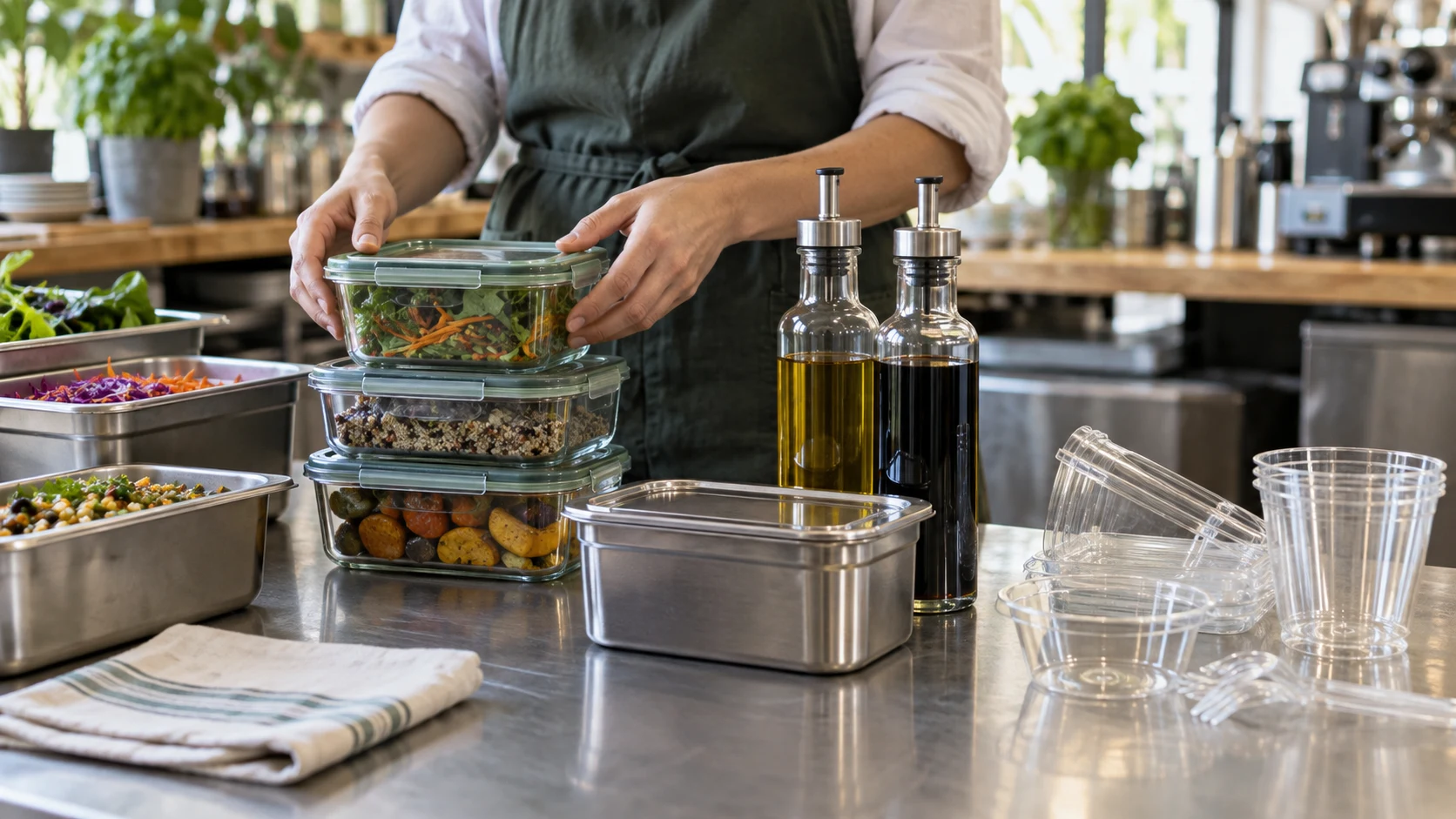
Use this checklist before approving a compostable, biodegradable or PLA-based product:
- Define the use case. Is the item for hot drinks, cold food, oily food, takeaway, events or back-of-house prep?
- Ask for the standard. Which compostability or biodegradation standard is claimed, and what conditions does it require?
- Check the local route. Will your waste contractor actually accept the item, or will it go to landfill or incineration?
- Prefer reuse where practical. If customers stay on site, washable cups and containers may be simpler than a new disposable material.
- Avoid vague marketing language. Do not rely on "eco," "green" or "planet-friendly" without documentation.
- Train staff. A better package still fails if staff and customers put it in the wrong bin.
- Review exposure points. For hot, acidic or oily foods, ask suppliers for food-contact and use-condition data.
The goal is not perfection. It is to stop treating material substitution as the whole environmental strategy. Prevention, reuse, correct collection and transparent claims do more work than a biodegradable label by itself.
Conclusion: better materials still need better systems
The new PLA microplastics study is a useful warning against lazy certainty. It does not close the human-health debate, and it does not make every biodegradable product suspect. It shows that biodegradable plastic particles can change under simulated digestive conditions and that enzymes such as pepsin and trypsin may accelerate that transformation.
For readers, the practical answer is steady and unglamorous: use fewer disposable items, demand specific evidence for material claims, match packaging to real collection infrastructure, and keep watching the science. Biodegradable plastics may have a role, but they are not a permission slip for throwaway systems. The cleanest microplastic is still the one that was never generated.
FAQ
Does this study prove PLA packaging is unsafe?
No. The study used a simulated gastrointestinal system and does not prove real-world harm from using PLA packaging. It shows that PLA microplastics can transform under digestive-like conditions, which supports further research and cautious procurement.
Is biodegradable plastic always better than conventional plastic?
No. It depends on the product, the standard, the use conditions and the waste route. A biodegradable item that is littered or sent to the wrong stream can still contribute to pollution.
What should cafes use instead of single-use PLA cups?
For on-site service, durable reusable cups are usually the first option to test. For takeaway, choose materials accepted by your local waste system and give staff clear sorting instructions.
Are microplastics regulated in the EU?
Yes, but not through one single rule for every source. The EU has a REACH restriction for intentionally added microplastics and wider initiatives on pellet losses, plastic pollution and unintentional releases.
Sources
- Wu et al., npj Emerging Contaminants: Transformation of PLA microplastics in a simulated human gastrointestinal system
- European Commission: Microplastics
- European Commission: Regulation (EU) 2023/2055 restriction on intentionally added microplastics
- World Health Organization: Dietary and inhalation exposure to nano- and microplastic particles
- World Health Organization: Microplastics in drinking-water