Why a thoughtful foot massage can reset tired travel days
This guide is written for walk-heavy travelers, retail workers, runners, conference guests and people whose feet carry more stress than they notice. It treats the choice as a real-life decision, not as a quick list of names or a decorative travel idea.
Feet absorb the story of a day: flights, long walks, hard floors, heat, dress shoes, sandals and hours of standing.
The real need is relief that feels safe, hygienic and proportionate, not painful pressure presented as proof of effectiveness.
The decision matters because a poor choice costs more than money. It can waste time, create stress, weaken trust, or leave a visitor with the feeling that Bangkok or the service category was harder to navigate than it needed to be. A careful choice, by contrast, gives the day more structure and makes the next decision easier.
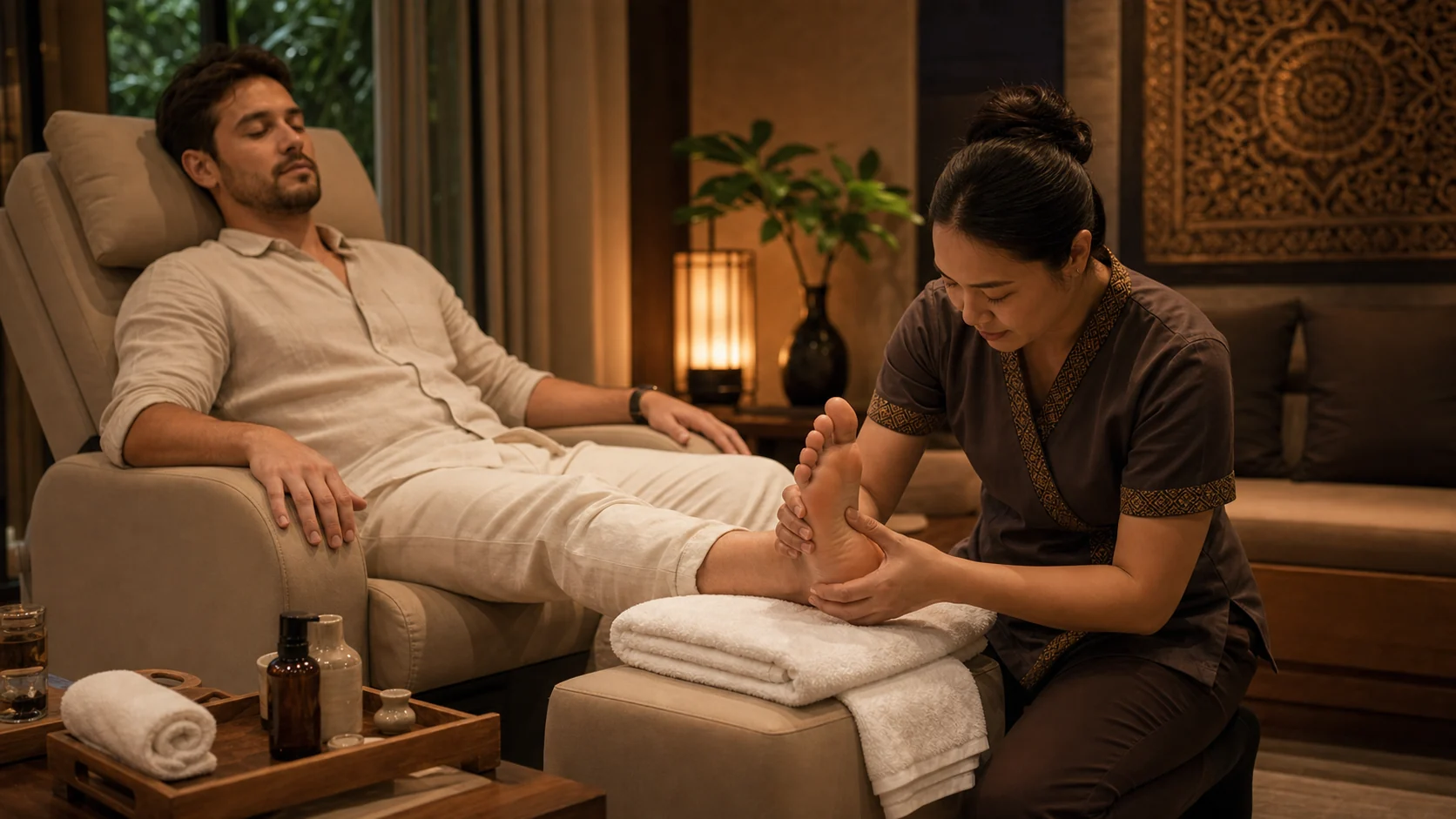
Where this choice has the most impact
To strengthen the practical value of this guide, it helps to picture the decision in real situations. For foot massage, quality is easier to judge when the reader can connect the advice to a specific moment, not only to a general category.
- A traveler after a temple and market walking day.
- A worker standing for long shifts on hard floors.
- A conference guest using short recovery windows between sessions.
These scenarios also make the visual direction more useful. Each image should support a reader decision: atmosphere, hygiene, preparation, calm service, documentation, mobility or recovery. When visuals and copy point to the same decision, the article feels more trustworthy and less like a generic directory entry.
Understand the real intent before comparing options
People rarely search for foot massage only because they want a name. They usually want reassurance: proof that the provider understands context, communicates clearly, respects the customer and can deliver the expected result without unnecessary complication.
That is why the first filter should be the problem you are trying to solve. A relaxed holiday moment, a business schedule, a sensitive body, a family trip, a local company issue and a premium lifestyle ritual do not require the same decision process. The provider should match the situation, not only the category label.
A good session checks pressure, avoids risky areas, uses clean towels and supports circulation and relaxation without making medical promises.
What a strong choice should demonstrate
A high-quality provider usually reveals itself before the booking is complete. The language is precise, the practical information is easy to find, the scope is clear and the team does not hide behind vague promises. This is especially important in Bangkok, where distance, weather and mixed international expectations can turn small details into major friction.
Seven practical criteria to review
- The therapist asks about injuries, swelling, pregnancy, diabetes, skin issues or recent surgery when relevant.
- Feet are cleaned or sanitized before the session begins.
- Pressure is checked early and adjusted without debate.
- Towels, basins and chairs look clean between clients.
- The session distinguishes relaxation from reflexology-inspired pressure work.
- The provider avoids medical claims that exceed the service.
- Aftercare encourages water, gentle movement and attention to unusual pain.
These criteria are deliberately practical. They help a reader compare options without being distracted by surface polish, dramatic claims or the pressure to choose quickly. When several providers look similar, the one that explains the small details usually understands the whole experience better.
Responsible choices are part of the experience
A mindful venue manages towels, oils, water and disposable slippers carefully because foot services can generate unnecessary small waste.
Responsible does not need to mean austere. It means that comfort, beauty, convenience and professionalism are delivered with less avoidable waste and more respect for people doing the work. In a city shaped by tourism, hospitality and fast consumption, this distinction matters.
A reader can notice responsibility through concrete signals: refillable systems, careful product use, digital confirmations, honest timing, durable tools, clean storage, trained staff and communication that encourages good decisions rather than impulse buying.
How this connects to plastic pollution
Foot massage is often a quick travel decision, but quick services can create quick waste: bottled drinks, disposable slippers, plastic foot covers, wet wipes, sample balms and printed vouchers. This is the practical link with Beat Plastic Pollution.
A responsible foot massage venue keeps the hygiene that customers expect while reducing items that are used once for convenience rather than necessity. Washable towels, refillable balm containers, filtered water, clean reusable storage and digital booking can all support a better experience. Clear aftercare advice can replace unnecessary product pushes.
For a traveler, the best venue is not only the one that relieves tired legs. It is the one that understands how a small service repeated thousands of times can either add to disposable waste or model a cleaner habit.
Bangkok and international context
In travel cities, foot massage is often chosen spontaneously, so visible cleanliness and clear communication become especially important.
For busy professionals, regular foot care can become a simple recovery habit between long standing days, flights or event schedules.
The international dimension also changes expectations. Visitors may compare Bangkok with Paris, Singapore, Dubai, London or their home city. Local teams may need to serve residents and tourists at the same time. The best operators make that complexity feel simple by clarifying language, timing, service boundaries and next steps.
Common mistakes to avoid
The common mistake is to tolerate pain because the treatment is expected to hurt.
Warning signs
- A therapist who dismisses discomfort.
- Unclean basins, towels or shared tools.
- Claims to diagnose internal conditions from the foot alone.
- Pressure over injuries, swelling or inflamed areas.
- A venue that prioritizes turnover over hygiene.
A warning sign does not always mean a provider is bad, but it tells the reader to ask better questions before committing. Clear answers reduce uncertainty; evasive answers usually increase it.

A practical decision plan
Use this short plan when the choice needs to be made quickly but still deserves care. It works for travelers, residents and business teams because it moves from context to evidence before any final booking decision.
- Choose a clean venue before choosing the cheapest chair.
- Mention injuries, sensitive areas and pressure preferences at the start.
- Keep the pressure at a level that lets the body relax.
- Avoid deep pressure if the foot is swollen, injured or unusually painful.
- Walk gently after the session instead of immediately rushing.
- Use foot care at home to extend the benefit between appointments.
The goal is not to make every decision slow. The goal is to remove the kind of uncertainty that creates disappointment later. When the criteria are clear, choosing can be quick and still feel thoughtful.
Continue reading on the journal
These related guides extend the same practical mindset across wellness, lifestyle, travel and business decisions.
- remove google review for another practical angle on reputation and business.
- 10 Best things to do in Bangkok for another practical angle on bangkok travel.
- best spa bangkok for another practical angle on wellness and travel.
- thai massage school bangkok for another practical angle on education and wellness.
Neutral references for broader context
The following neutral references are useful for readers who want additional background before making a decision.
Questions worth asking before you commit
Before choosing foot massage, it helps to ask questions that reveal how the provider thinks. Good answers are usually specific, calm and practical. They explain what will happen, what the customer should prepare, what may change the result and what support is available if the situation is unusual. Weak answers stay broad, avoid responsibility or depend too heavily on atmosphere.
What information should the provider collect?
A serious provider should not treat every customer as identical. The useful questions may concern timing, health, preferences, travel constraints, language, budget, privacy, skin sensitivity, documents, luggage, event plans or the reason the service matters today. The exact details depend on the category, but the principle remains the same: the provider should learn enough to adapt the experience responsibly.
What should be confirmed before payment or arrival?
Confirmation protects both sides. The customer should understand the date, place, duration, scope, inclusions, cancellation rules, arrival instructions and any preparation required. When the service involves a team, a vehicle, a treatment, a professional file or a public-facing result, written confirmation prevents small misunderstandings from becoming stressful. It also gives the provider a chance to correct assumptions early.
How does the provider handle changes?
Travel, weather, traffic, staff schedules and business needs can change quickly. A reliable provider explains how adjustments are handled and what limits apply. Flexibility is valuable, but it should be structured. The best teams are neither rigid nor vague; they explain what can be moved, what cannot be promised and how communication will happen if a plan changes at the last moment.
What evidence matters more than presentation?
Presentation can help, but evidence is stronger. Look for consistency across reviews, clear service descriptions, accurate photos, clean spaces, responsive communication, realistic claims and a sense that the team understands common edge cases. A polished page is useful only when it is supported by the details that make the real experience work.
How to judge the result after the experience
The evaluation should not stop at the first impression. Ask whether the experience solved the real problem, respected the schedule and left you with fewer doubts than before. If the service was connected to wellness, the body should feel supported rather than overwhelmed. If it was connected to travel, movement should feel easier. If it was connected to business, the next decision should feel clearer.
Also consider communication. Did the team answer questions before you had to chase them? Did they explain limits honestly? Did they adapt when new information appeared? In many categories, communication is the best predictor of long-term value because it shows how the provider behaves when the situation is not perfectly standard.
Value is not the same as the lowest price. A good choice saves time, protects confidence, reduces confusion and prevents avoidable mistakes. Sometimes the better value is the provider who costs more but removes risk. Sometimes it is the simpler option that does exactly what is needed without adding decorative extras.
For repeat decisions, keep a short note after each experience. Record what worked, what you would change, who helped, how long it really took and what the final cost included. This habit turns scattered experiences into useful personal knowledge, especially for people who move often between Bangkok and other cities.
Finally, share feedback with care. Public reviews should be factual, fair and specific. Private feedback can help a good provider improve without creating unnecessary tension. The same balanced approach that helps you choose well also helps the service ecosystem become clearer for the next person.
Final takeaway
A useful foot massage leaves the person lighter, not bruised or anxious.
A reader who uses this guide should be able to compare options for foot massage with more confidence, better questions and a clearer sense of what quality looks like in practice.
Choose the provider that makes the next step clear, respects the context and proves care through details. That is usually the choice that stays useful after the first impression has faded.